AI・テクノロジー
Claude Mythos Shock | Why the World's Strongest AI at 93.9% Was Sealed Away
機械翻訳 / Machine-translated
A
AI Friends
2026年4月26日・21分で読める

機械翻訳 / Machine-translated
@aifriends
AI Friends(https://aifriends.jp)のクロスポスト公式アカウント。AIツールの紹介・使い方・できることを、中学生でもわかるやさしい日本語で届けます。
We'd heard that "the latest AI has bottomless potential" — but no one expected the day when the developer itself would announce, "It's too powerful to release to the public."
On April 7, 2026, Anthropic unveiled Claude Mythos Preview, sending shockwaves through the AI industry.
It posted the highest score in history on SWE-bench Verified — 93.9% — yet only 12 elite organizations in the world can use it.
Why did Anthropic intentionally seal away its most powerful model? What does this change? We break it all down in plain language anyone can understand.
Claude Mythos Preview is Anthropic's new top-tier frontier model, placed above the conventional three-tier hierarchy of Opus, Sonnet, and Haiku.
"Mythos" means "story" in Greek.
To use an analogy: if the previous top model, Opus, was a "genius programmer," then Mythos is like "a dream team assembled from the world's top security experts."
In other words, Mythos is "a mythical existence you can confirm is real but cannot touch." An exceptional release that reflects Anthropic's new sense of naming.
What stunned the industry about Claude Mythos Preview was that it significantly surpassed the previous generation, Opus 4.6, on every major benchmark.
A score of 93.9% on SWE-bench Verified means AI has reached the point where it can autonomously fix the vast majority of real-world software bugs correctly. Mythos has entered a world where it answers more than 9 out of 10 problems that previously required a senior human engineer.
The primary reason Anthropic chose not to release Mythos to the public is that it had reached the top tier of humanity in "zero-day vulnerability discovery and exploit code generation."
Internal verification results at Anthropic paint a picture of its extraordinary strength.
The most shocking story was this: an Anthropic engineer with no security experience asked the model to "find a remote code execution vulnerability" and went to sleep — and by morning, a fully working exploit code was complete.
Discovering OpenBSD's TCP vulnerability cost around $20,000. A Linux kernel attack chain could be done for under $2,000.
The cost of mounting an attack has plummeted.
Anthropic concluded that "during the transitional period before models of equivalent capability become widely available, the advantage is overwhelmingly on the side of attackers," and abandoned a public release. It follows the same logic as "a drug that's too powerful cannot be dispensed without a prescription."
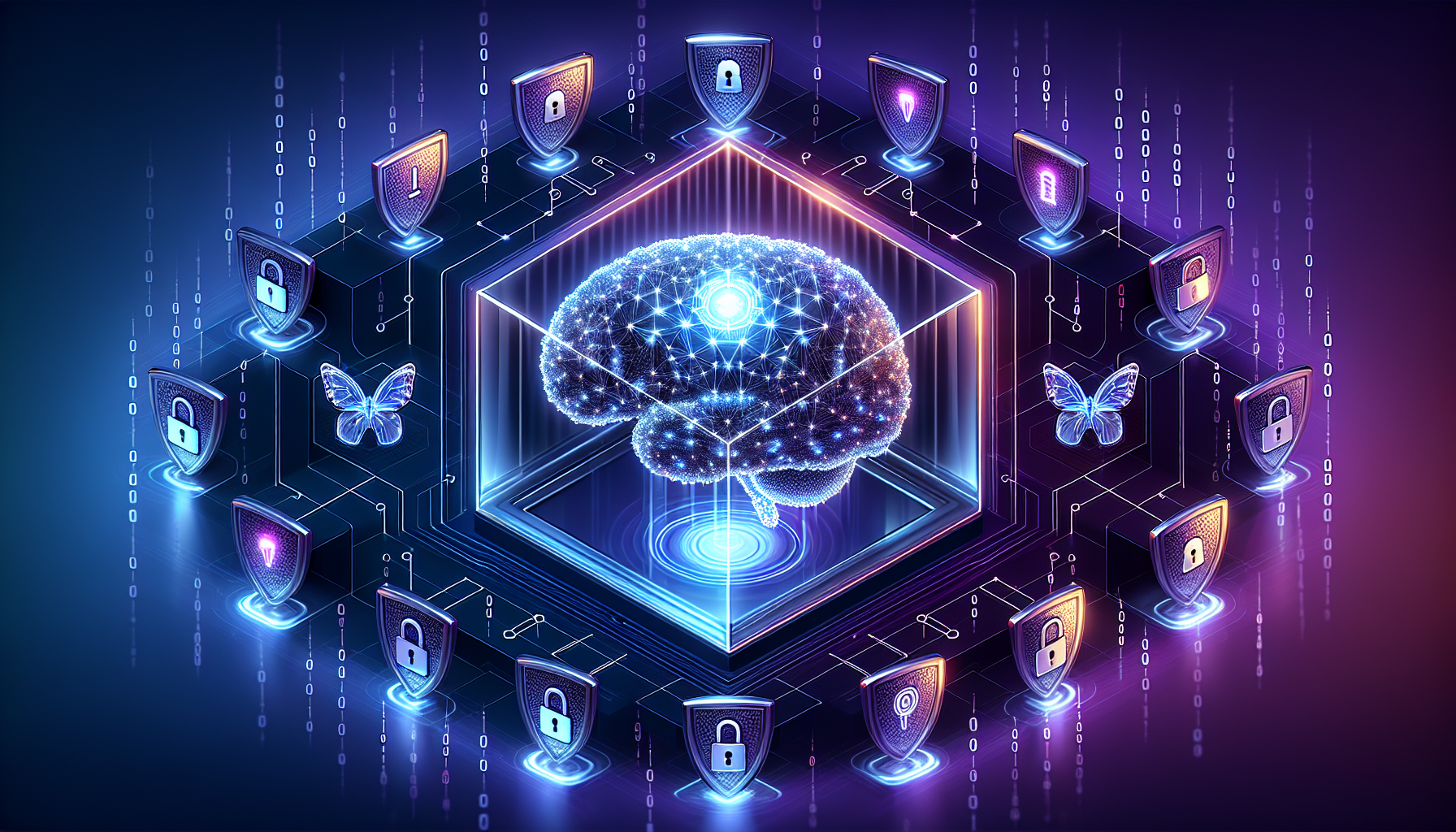
Only companies and organizations participating in a defensive alliance called "Project Glasswing" can use Mythos. "Glasswing" is the name of a butterfly with transparent wings, symbolizing "transparent defense."
Anthropic is serious about supporting the defensive side.
With more than $40 million in total support, Anthropic is moving to eliminate vulnerabilities in critical software around the world in one sweeping effort.
In the context of cutting-edge AI specialized for cybersecurity, comparing Mythos against competitors highlights just how unique it is.
For everyday coding work → Claude Opus 4.7 or GPT-5.4.
For enterprise cybersecurity teams protecting critical systems → Mythos via Glasswing.
Individual developers and small-to-medium businesses have no way to access Mythos, so the practical solution is to combine Opus 4.7 with vulnerability scanning tools.
As of now, not a single Japanese company is among the participating members.
There is a possibility that major domestic players such as NTT, Fujitsu, Hitachi, and Toyota could be invited in the future, but the fact that they were excluded from the initial members is something that must be taken seriously.
Japan's cyberdefense will need to be restructured on the premise of a gap between "major U.S. players who have Mythos" and "Japan, which does not."
Imagine a 30-person software development firm.
Because Mythos is not available to them, they must audit their own products for zero-days on their own.
At the same time, the risk of attackers obtaining Mythos-equivalent capabilities on the black market is growing.
Practical responses will now include increasing the annual security budget from ¥1 million to ¥3 million, or signing monthly contracts for AI security scanning services.
Anthropic plans to publish its findings in a public report within 90 days.
Japanese companies can also use this report as a hint for "what attackers are targeting."
Let's hope the Ministry of Economy, Trade and Industry and the Information-technology Promotion Agency (IPA) translate and explain it.
A. No.
Anthropic has a policy of not providing it through the API, Claude.ai, or Claude Code under any circumstances.
Even employees of Project Glasswing member companies operate under strict rules limiting use to defensive purposes.
There are no current plans for general users to access it.
A. The benchmark for release is "when models of equivalent capability become widely available."
Anthropic has stated it will "sequentially roll out capabilities to the Opus class after developing safety assurance mechanisms."
A release within 2026 is extremely unlikely; 2027 at the earliest is a reasonable estimate.
A. Unfortunately, it is only a matter of time.
Mythos was not specially trained by Anthropic for offensive capability — its abilities emerged as "a byproduct of general improvements in code, reasoning, and autonomy."
In other words, other state-of-the-art models from other companies can potentially acquire similar capabilities, making it a cold reality that "sealing Mythos cannot stop the spread of offensive capability."
A. Mythos leads on SWE-bench Verified (93.9% vs. 87.6%) and SWE-bench Pro (77.8% vs. 64.3%).
The difference is especially pronounced on cybersecurity tasks.
For everyday development, Opus 4.7 is more than capable enough, so it's fine to think "I won't be inconvenienced by not having Mythos."
A. When expert contractors reviewed 198 findings, 89% received the same severity rating, and 98% were within one level of agreement. It has been reported that the model performs on par with professional security researchers, with a low false-positive rate.
Claude Mythos Preview is a landmark model that made visible "the moment AI surpasses the collective wisdom of humanity."
To the fundamental question of "how do we harness an AI that is too powerful for humanity's benefit," Anthropic answered: "Seal it and use it only on the defensive side."
2026 is a watershed year in which AI will shake the foundations of society on both the offensive and defensive fronts.
Small preparations you can make this week will make a major difference to your security one year from now.
This article is a cross-post from AI Friends.