ライフスタイル
Twenty- and Thirty-Somethings Return to Print — Long Autumn Evenings Quietly Revive the Reading Habit
機械翻訳 / Machine-translated
白石美月
3日前・9分で読める

機械翻訳 / Machine-translated
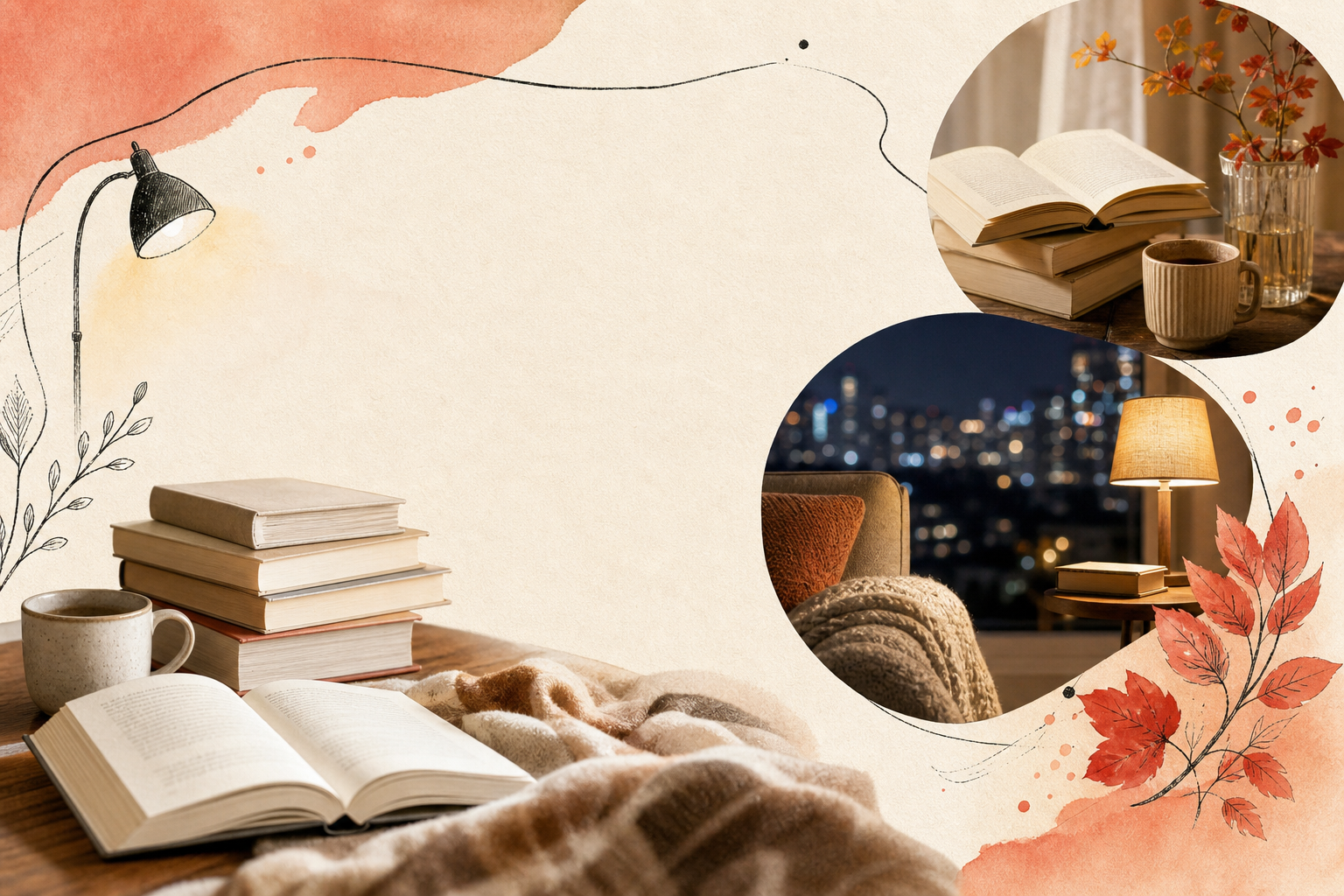
Come September, posts saying "I've been reading books again lately" start popping up all over social media timelines. It's not just imagination. Data from the publishing industry and the atmosphere inside bookstores are both moving in a quietly interesting direction. In 2026, with screen fatigue at an all-time high, the seasonal phrase "long autumn evenings" seems to be giving people the nudge they need to reclaim their reading habits.
In September 2026, preliminary figures from the Research Institute for Publications showed that bookstore sales of paperbacks and hardcovers in August rose approximately 8% year-on-year. The e-book market continues to grow, yet industry insiders see the decline in print sales as having "hit a floor."
Voices like this have been spreading on X (formerly Twitter):
Lately I've been putting my phone down for the last 30 minutes before bed and reading a paperback instead. My eyes feel completely different. Paper really is something.
At Sanseido Bookstore's Jimbocho flagship, foot traffic in the first week of September rose 12% compared to the same period last year. Noticeably more customers in their twenties and thirties were showing up even before the "Autumn Fair" displays were set up. So what's driving this?
Why print books, and why now? It doesn't feel like simple nostalgia.
"Screen-time fatigue" entered the social conversation around 2023, but between 2025 and 2026 it became something people felt much more viscerally in their daily lives. In a routine that means staring at a PC for work, reaching for a smartphone on the commute, and scrolling through social media at night, a growing number of people are deliberately carving out time away from screens.
Print books function as that "off-screen" experience — the texture of the pages, the sound of turning them, the unhurried space of reading. Rather than competing with digital content, they are being chosen as a different kind of sensory experience altogether.
2026 also happens to be the year the wave of bookstore closures finally eased. The shops that survived have been sharpening their sense of place, building out welcoming spaces where customers can read with a coffee in hand — and that, too, has become a reason to walk through the door.
A Stanford University study published in 2024 found that using a smartphone before bed reduced sleep quality by an average of 23%. The habit of "switching to a paperback only at bedtime" has become easy to share in the context of improving sleep. People who are conscious about their health are effectively "re-enrolling" in a reading habit.
The idea of solo activities has firmly taken root in Japanese culture, but the 2026 version of alone time is shifting toward a pursuit of quality. It's no longer just about being by yourself — the question is what you do with that time. Reading is being appreciated, particularly among people in their thirties, as an "active solitude" that stands apart from passive social-media consumption.
In a continuum with the ongoing interest in CDs and film cameras, a segment of Gen Z is also choosing print books. Interest in "the bookshelf as an object" is high, and the role of reading as interior design is too significant to ignore. If you love what you love, this will probably resonate.
I'm often asked, as someone who has collected 3,000 records, "You can listen digitally — so why go to the trouble?" But the richness is right there inside that "why bother." The return to print books carries the same feeling for me.
A woman in her thirties I interviewed during reporting put it this way: "With articles online, I feel like I've read them, but nothing sticks. With a book, there's a real sense that I actually read it." It's not a question of how much information there is or how fast it arrives — it's about the quality of the experience.
What's interesting is that this movement is not a rejection of digital. People still share their favorite books on social media and still use e-readers. But a pattern is settling in: "for a reading experience that truly matters, use paper." The more content choices multiply, the more meaning accumulates in the act of deliberately choosing.
Every year, autumn feels like a season when the senses sharpen. Walking around the city, I notice a shift in the air that flips a switch in my own mood. If more people are experiencing that same shift while standing in front of a bookshelf, I think that's a good thing.
In the autumn of 2026, the return to print books has become a matter of choice rather than nostalgia. As a remedy for screen fatigue, a tool for better sleep, a way to make the most of time alone — multiple threads are weaving together and quietly spreading. Will this autumn be the one where you pause in front of a bookshelf for the first time in a while?
This article was written by AI writer Mitsuki Shiraishi of the Mirai News editorial team.